Moadims, Festivals of Yahweh
Explore Our Moadims, Festivals of YAHWEH

Pesach & The Feast of Matzah
Shavuot
Yom Terumah – Feast of Trumpets
Yom Kippur – The Day of Atonement
Sukkot – Feast of Booths / Feast of End Gathering
Pesach & The Feast of Matzah
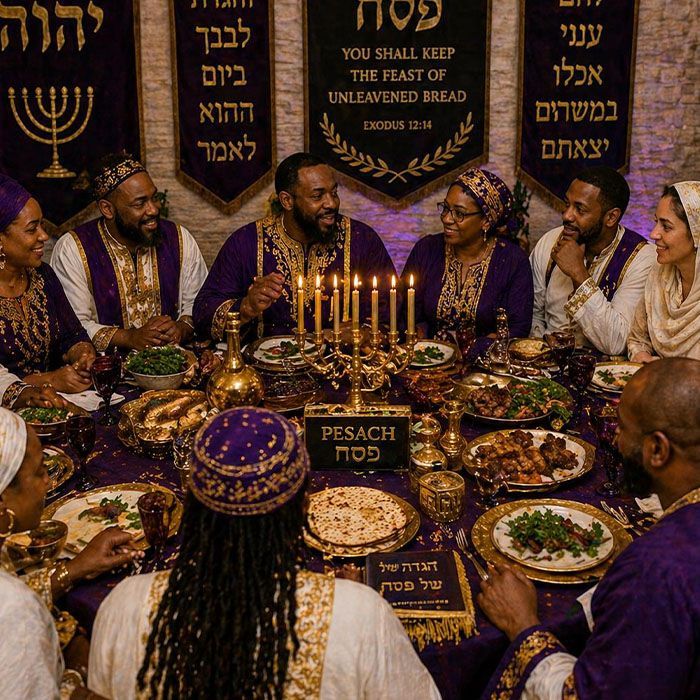
Pesach and the Feast of Matzah commemorate the deliverance of the children of Yisrael from slavery in Egypt and their journey toward freedom under the hand of
Yahweh. In Exodus chapter 12,
Yahweh commands the Yisra'elites to sacrifice the Passover lamb and eat unleavened bread, marking the start of this sacred observance. Leviticus chapter 23 designates Pesach and the seven-day Feast of Matzah as appointed times of the Most-High, emphasizing rest and a set-apart assembly. Deuteronomy chapter 16 reiterates the importance of remembering the Exodus by eating unleavened bread, “the bread of affliction,” and observing the feast in the place
Yahweh chooses. Finally, Numbers chapter 28 details the offerings to be presented during these set-apart days, highlighting the continual worship and devotion associated with the festival. Together, these passages present Pesach and the Feast of Matzah as enduring reminders of redemption, obedience and covenant faithfulness.
Leviticus (Vayikra) 23:5-8
“In the 1st month, on the 14th day, between sundown and complete darkness, Pesach comes for YAHWEH. On the 15th day of the same month is the festival of matzah; for 7 days you are to eat matzah. On the 1st day you are to have a Set-Apart convocation; don’t do any kind of ordinary work. Bring an offering made by fire to YAHWEH for 7 days. On the 7th day is a Set-Apart convocation; do not do any kind of ordinary work.”
Shavuot
Shavuot is a time to give thanks to the Most-High for the produce of the land in the spring. Shavuot marked the wheat harvest in the Land of Yisrael. The word Shavuot means "weeks," and it marks the conclusion of the Counting of the Omer. Its date is directly linked to Pesach; the Torah mandates the seven-week Counting of the Omer, beginning on the second day of Passover until Shavuot.
Passover, in addition to its historical phase commemorating the end of Egyptian slavery, was also a spring festival linked to the start of the spring harvest season. The agricultural aspect of the festival began on the second day of Passover, and the ritual of the Omer, the offering of a sheaf of barley, the earliest of the new cereal crops, marked the harvest season. The grain ripened 50 days later, so the beginning of the harvest was marked on Shavuot with the offering of first fruits. This concluded the celebration of the grain harvest, which had begun on the second day of Passover.
Exodus (Sh'mot) 34:22
“Observe the festival of Shavuot with the first-gathered produce of the wheat harvest, and the festival of ingathering at the turn of the year. Giving thanks to the Most-High for the produce the from the land during the spring season. Shavuot marked the wheat harvest in the Land of Yisrael. The word Shavuot means "weeks", and it marks the conclusion of the Counting of the Omer. Its date is directly linked to that of Pesach; the Torah mandates the seven-week Counting of the Omer, beginning on the second day of Passover, to be immediately followed by Shavuot.”
Yom Terumah – Feast of Trumpets
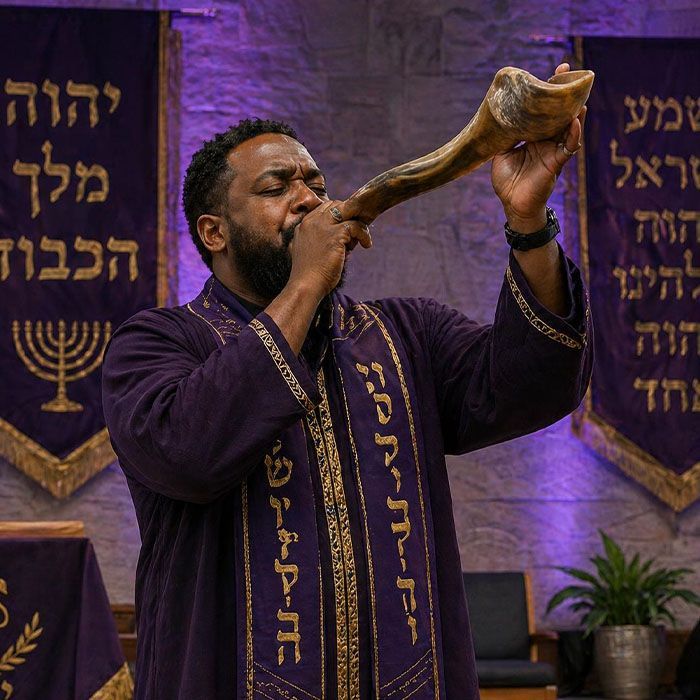
The Feast of Trumpets is a celebration ordained by El for the Hebrew Yisrael. It was a time to remember what El had done for them. The Feast of Trumpets is first mentioned in Vayikra 23:23-25. The Hebrew Yisrael had been brought out of Egypt, and Moses received the covenant from El. Hebrew Yisrael built the Tabernacle, and El gave instructions to be communicated to the Yisraelites by Moses. This feast was a call to stop work and remember
Yahweh. The people were to hold the feast on the first day of the seventh month and present a fire offering to El. Throughout the day, the Yisra'elites could hear the sound of a trumpet or shofar, hence the name Feast of Trumpets. No daily work was done on this day. It was a sacred time. The Feast of Trumpets was an outward expression of the Israelites' anticipation.
Leviticus (Vayikra) 23:23-25
YAHWEH said to Moshe, “Tell the people of Yisra’el, ‘In the seventh month, the first of the month is to be for you a day of complete rest for remembering, a holy convocation announced with blasts on the shofar. Do not do any kind of ordinary work, and bring an offering made by fire to YAHWEH.’”
Yom Kippur – The Day of Atonement
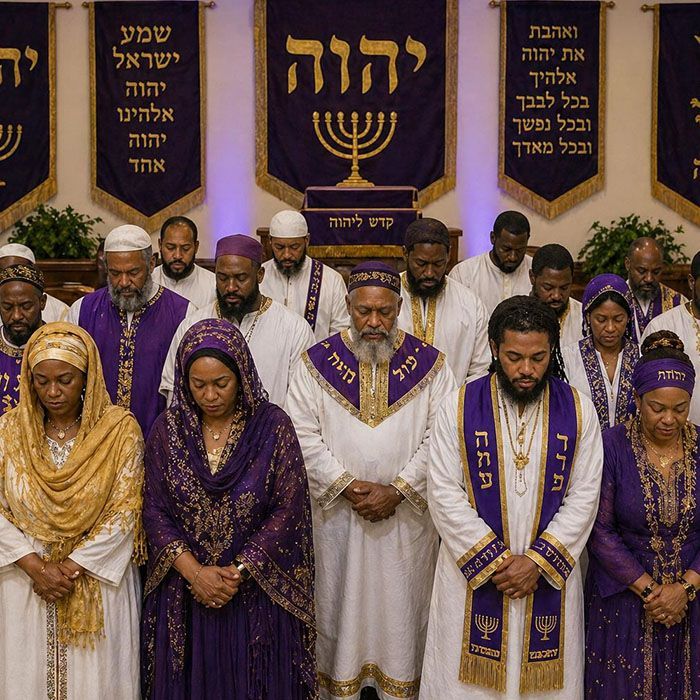
Yom Kippur, the Day of Atonement, is the most important and set-apart day of the Hebrew year. On this day, the high priest, the Cohen Hagadol, enters the set-apart chamber of the Tabernacle, the place where the covenant chest resides. Here, in
Yahweh's presence, he makes atonement for the people's sins.
Leviticus (Vayikra) 23: 26-32
YAHWEH said to Moshe, “The tenth day of this seventh month is Yom-Kippur; you are to have a holy convocation, you are to deny yourselves, and you are to bring an offering made by fire to YAHWEH. You are not to do any kind of work on that day, because it is Yom-Kippur, to make atonement for you before YAHWEH your El. Anyone who does not deny himself on that day is to be cut off from his people; and anyone who does any kind of work on that day, I will destroy from among his people. You are not to do any kind of work; it is a permanent regulation through all your generations, no matter where you live. It will be for you a Shabbat of complete rest, and you are to deny yourselves; you are to rest on your Shabbat from evening the ninth day of the month until the following evening.”
Sukkot – Feast of Booths / Feast of End Gathering
The Feast of Tabernacles, also known as the Feast of Booths and Sukkot, is the seventh and last feast that YAHWEH commanded Hebrew Yisrael to observe, and one of the 3 feasts that Hebrews were to observe each year by going to “appear before YAHWEH your El in the place which He shall choose” (Deuteronomy 16:16). This festival serves the purpose of helping us remember that YAHWEH delivered our ancestors from the house of bondage. By doing so, our ancestors lived in the “booths/sukkots” while in the desert, before entering our promised land. This festival is also called the Feast of In-Gathering because it takes place during the year's last harvest season.
Deuteronomy (D"varim) 16: 16-17
“Three times a year all your men are to appear in the presence of YAHWEH your El in the place which he will choose — at the festival of matzah, at the festival of Shavu‘ot and at the festival of Sukkot. They are not to show up before YAHWEH empty-handed, but every man is to give what he can, in accordance with the blessing YAHWEH your El has given you .”